Time & Schedules

Scheduling and time, run like software.

Build compliant coverage on one board, publish it with confirmations, let the team request and swap without the group text — then approve time that already reconciled itself against the schedule, with GPS-verified proof of presence where it matters.

Every shift compliance-checked as it's placed Every punch matched to its shift automatically Every visit GPS-verified at the point of care
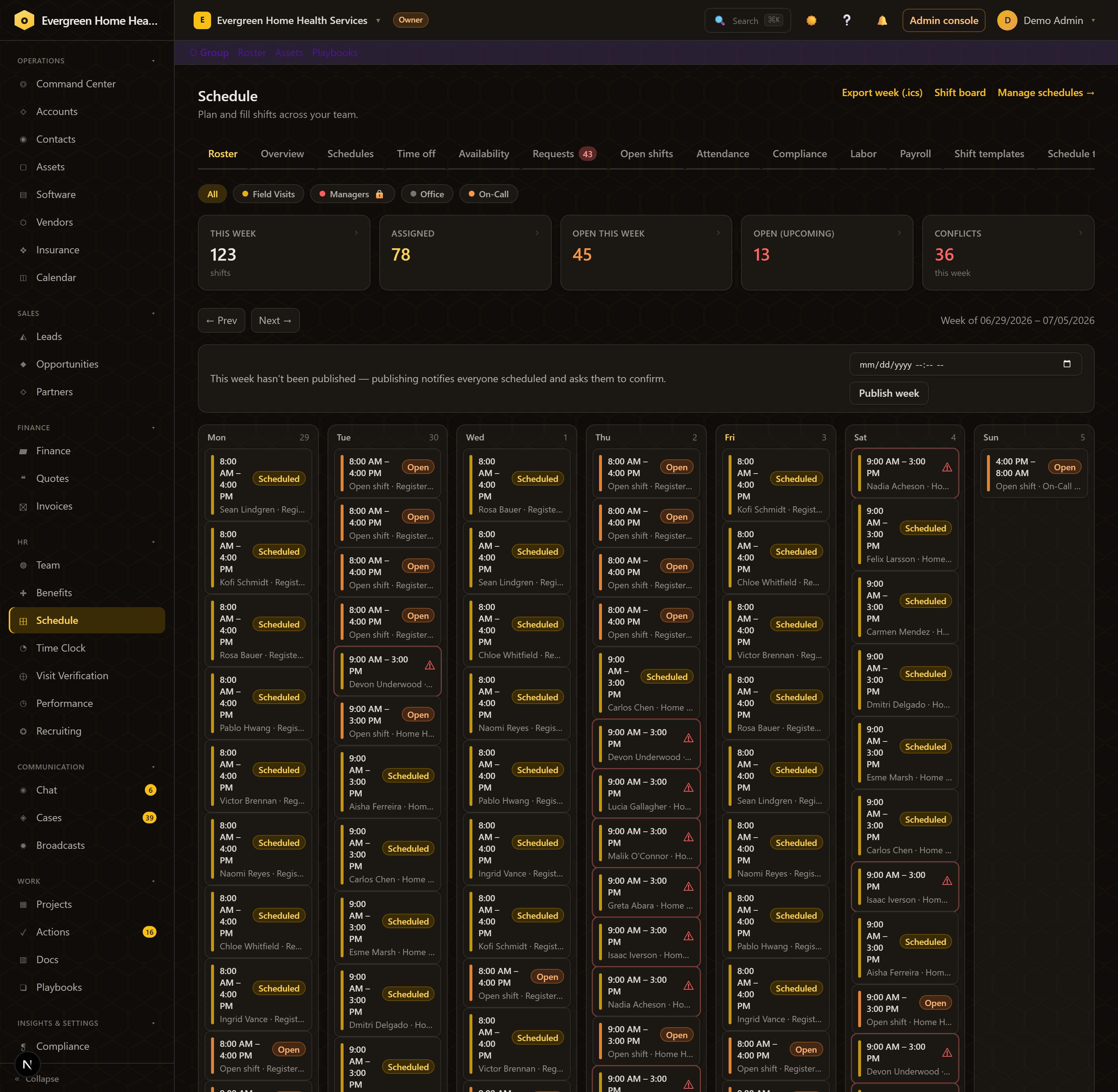
The scheduling board: 123 shifts this week, 78 assigned, 45 open, 36 conflicts flagged, with a publish banner and a full week of shift cards
Schedule One board: 123 shifts, 45 open, 36 conflicts flagged in red before anyone works them — and a publish button that notifies everyone scheduled.

The problem

The rota is a spreadsheet, and payday is where the surprises live.

Requests

Time off and swaps, without the group text.

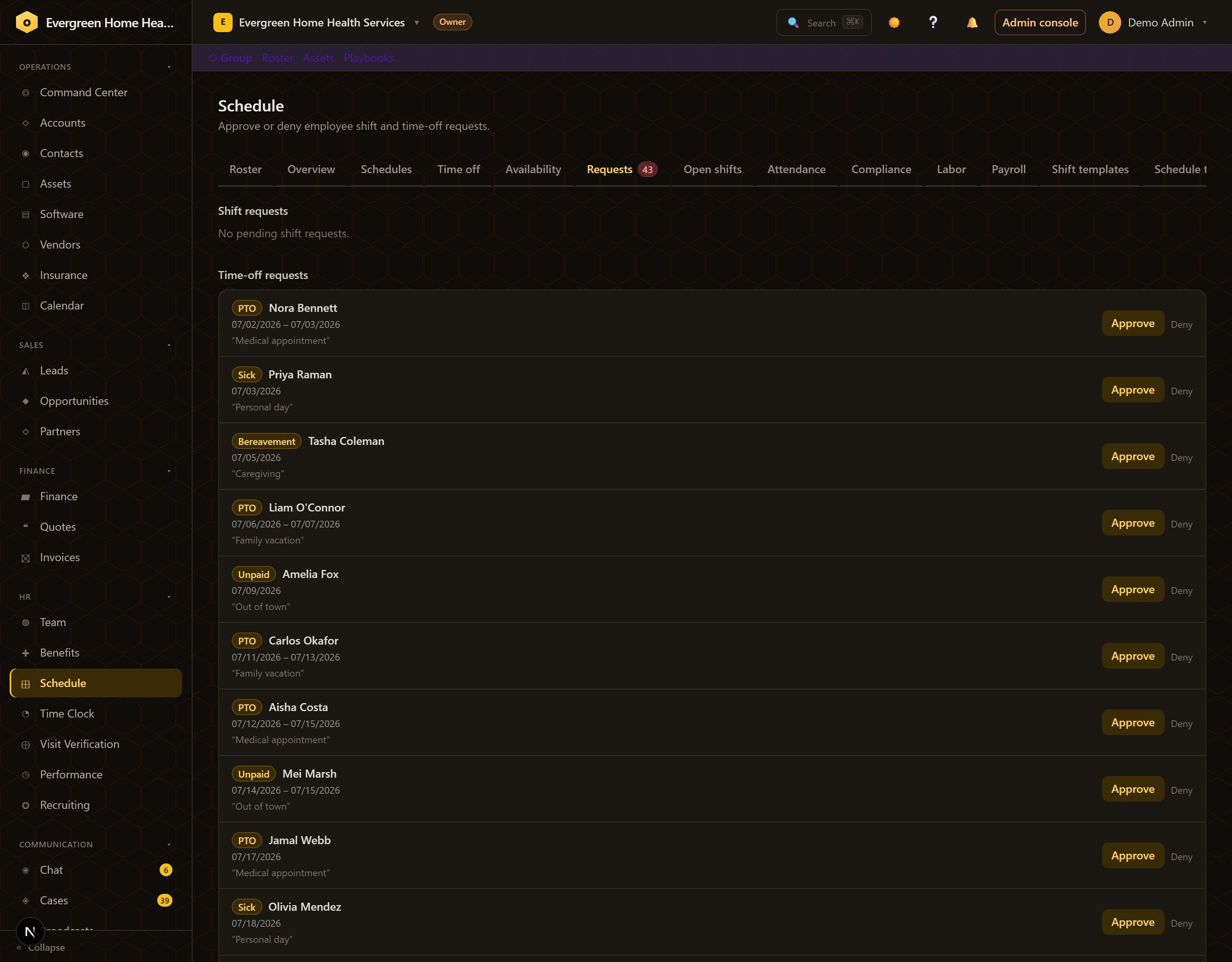
Employees submit PTO, sick, bereavement, and unpaid requests — plus availability and open-shift pickups — from their own view. Managers approve or deny from one queue, with the reason attached and the schedule updating itself. Forty-three requests is a list, not forty-three conversations.

The requests queue: PTO, sick, bereavement and unpaid time-off requests with reasons, dates, and approve/deny actions
Schedule → Requests The queue: typed requests with dates and reasons, one click to resolve each.

Compliance

A rules engine on every single shift.

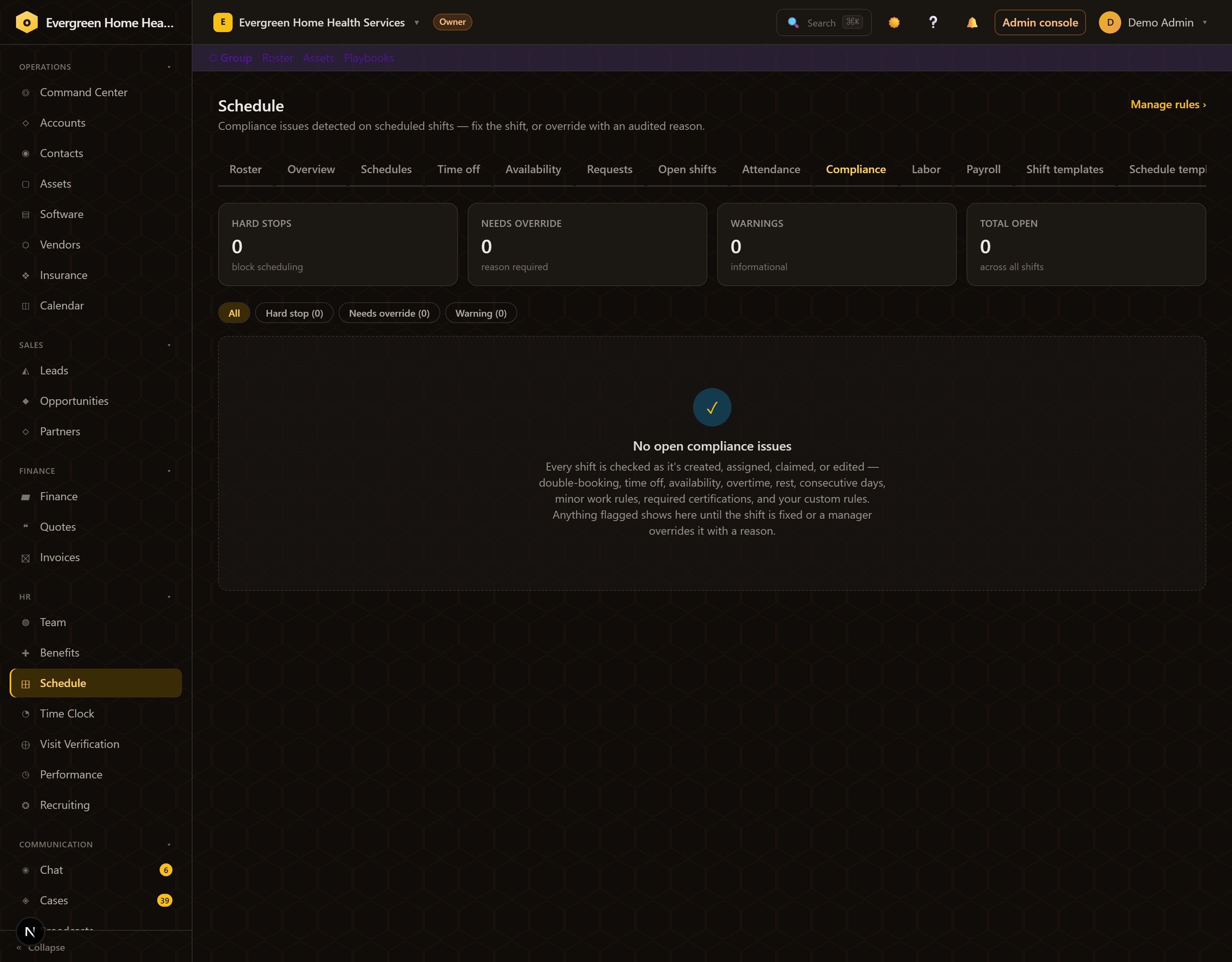
Every shift is checked as it's created, assigned, claimed, or edited — double-booking, time off, availability, overtime, rest, consecutive days, minor work rules, required certifications, and your own custom rules. Violations grade into hard stops, needs-override, and warnings; a manager can override with a reason, and the override is audited.

The compliance view: hard stops, needs-override and warnings counters, with every check listed — this week showing zero open issues
Schedule → Compliance What a clean week looks like — and the full list of what got checked to earn it.

Time Clock

Time that reconciles itself.

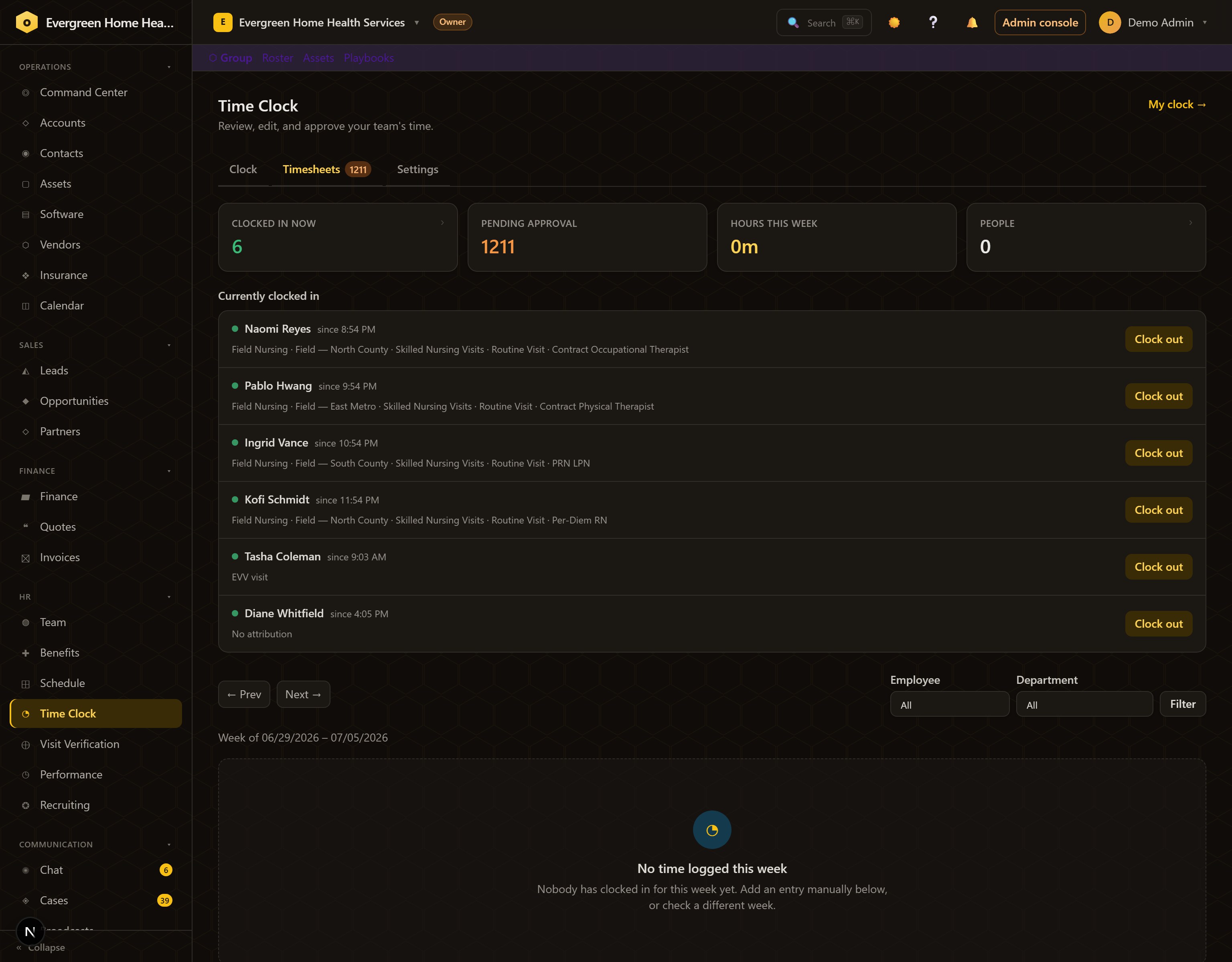
Punches carry their attribution — department, location, job, task — and because the clock knows the schedule, late, early, and overtime are flagged automatically by matching each punch to its shift. Managers approve by exception instead of auditing everything, and approved time flows to payroll export batches.

The Time Clock: six people clocked in right now with full job attribution, and 1,211 entries pending approval
Time Clock → Timesheets Six clocked in right now — each punch attributed down to the visit type — and the approval queue in one number.

Visit verification

Proof of presence, stamped by GPS.

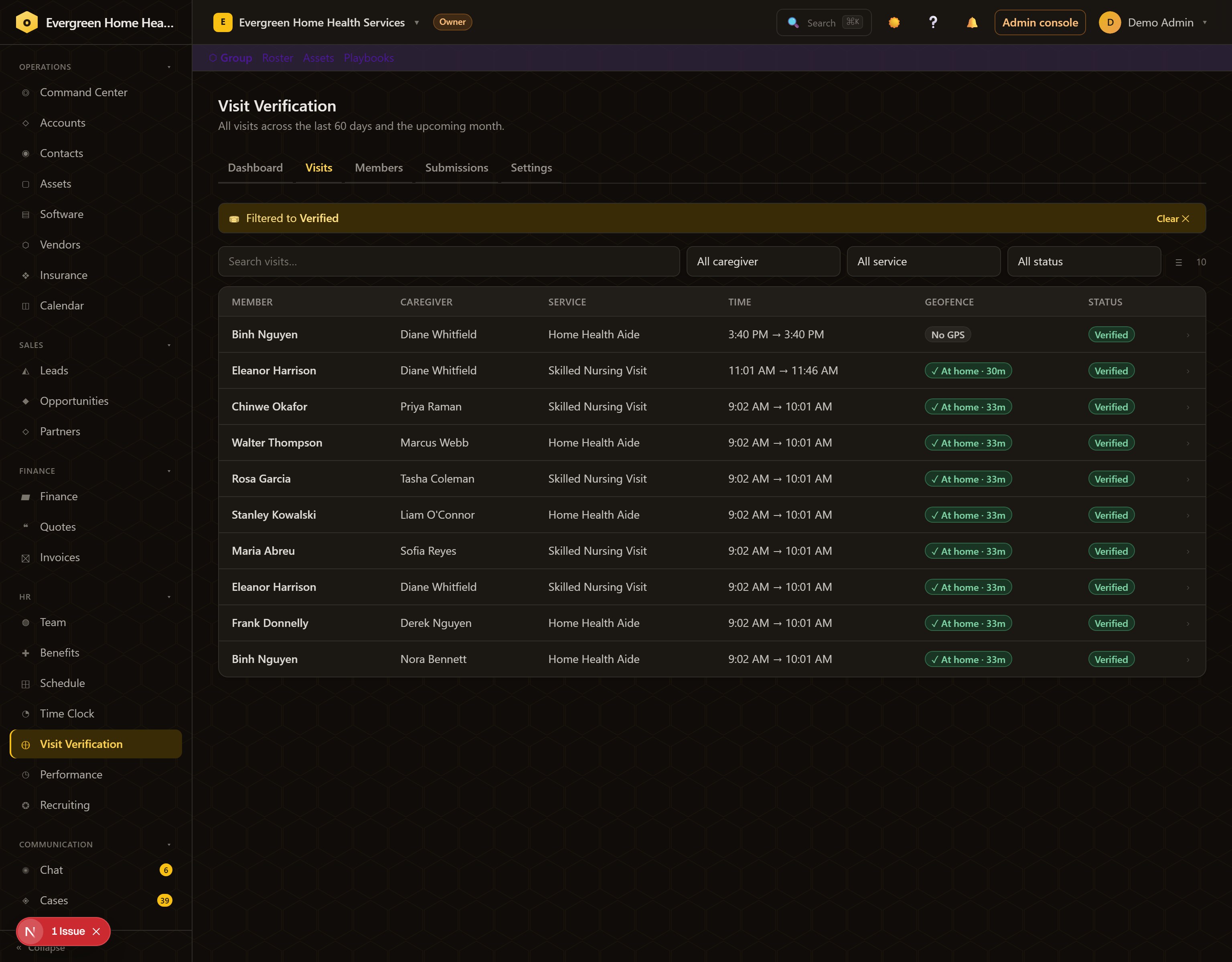
For home and field care, caregivers check in and out at the point of care; OpsHyv stamps the GPS fix and checks it against the visit's geofence. Verified visits reconcile against punches and authorizations, then flow to the state aggregator (Alt-EVV → Sandata) from the submissions queue — Cures Act compliance as a workflow, not a scramble.

Verified visits: member, caregiver, service, time, and an At home geofence chip on every row
Visit Verification → Visits Every verified row carries its geofence check — "✓ At home · 33m" is the evidence, attached.

How it runs

From coverage plan to payroll file — one pipeline.

  1. BuildStamp out coverage from shift templates; conflicts flag as you place.
  2. PublishEveryone scheduled is notified and confirms their shifts.
  3. Work & punchClock in with attribution; field visits verify by GPS and geofence.
  4. ApproveVariances surface by exception; managers clear the queue, not the haystack.
  5. ExportApproved time lands in payroll export batches, attribution intact.

Guardrails

Strict where it counts, flexible where it's safe.

Audited overridesRules can be overridden by a manager — with a reason, on the record. Flexibility never becomes invisibility.
Location is PHIEVV location history is treated as protected health information and gated to the people who should see it.
Everything on the logSchedule changes, punches, approvals, and submissions land on the audit trail with the actor attached.

The bottom line

The week stops being a scramble and becomes a pipeline.

Compliant coverage built in minutes, a team that requests and confirms in-app, time that approves by exception, and proof of presence a payer will accept — inside the platform that already runs your people, benefits, and compliance.